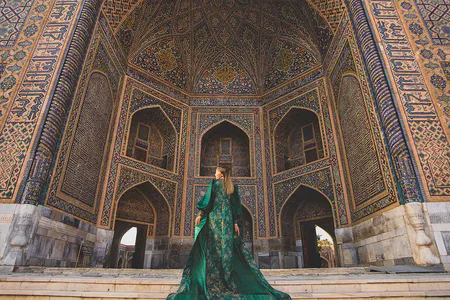
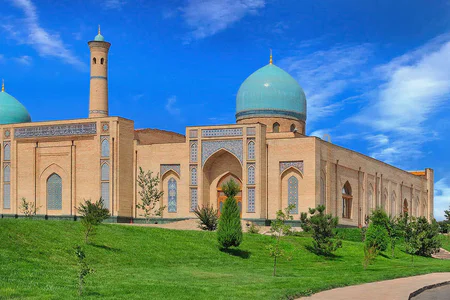
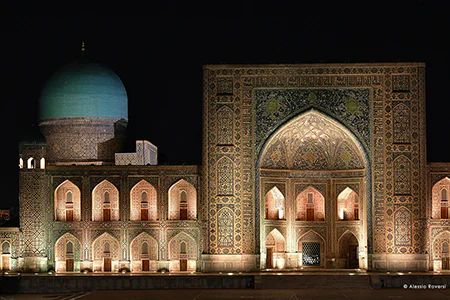
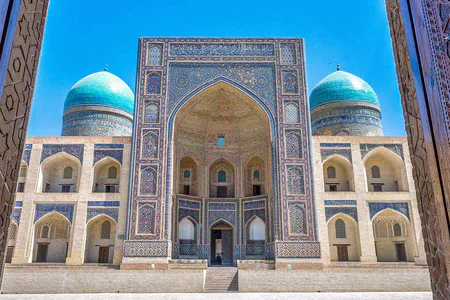
SAMARKAND SILK ROAD HERITAGE: The name Samarkand has resonated through history as a byword for splendour, and the reality does not disappoint. The Registan — a trio of soaring madrasahs encrusted with turquoise and gold tilework surrounding a vast central square — is one of the most magnificent ensembles of Islamic architecture on earth. At dawn, when the light turns the domes to burnished gold, it is simply one of the great sights of Asia.
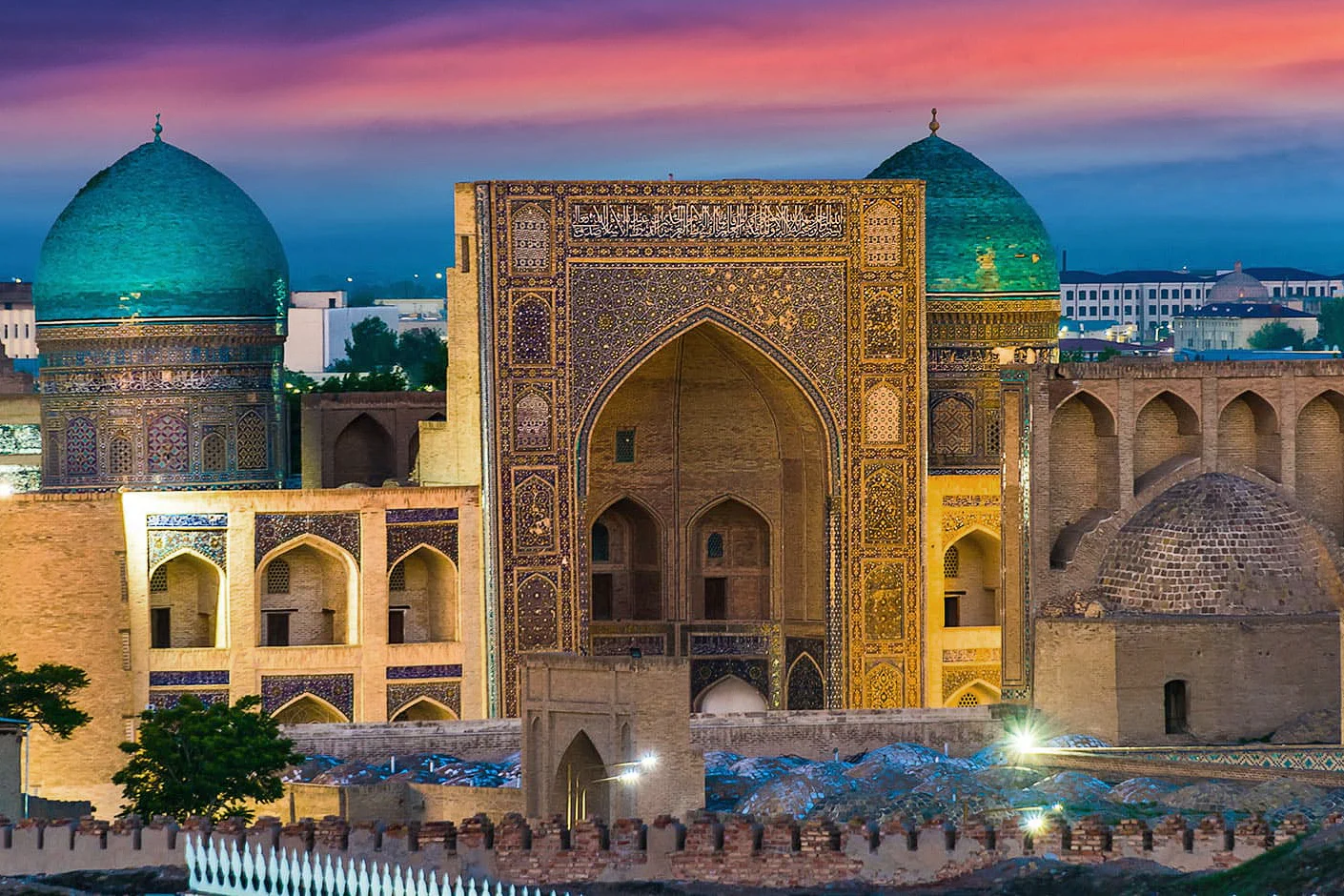
BUKHARA ANCIENT CITY: Bukhara is the best-preserved Silk Road city in Central Asia — a UNESCOWorld Heritage site of extraordinary coherence where over 140 architectural monuments survive within a compact and walkable old town. The 10th-century Samanid Mausoleum, the towering Kalon Minaret and the labyrinthine bazaar domes create an atmosphere of layered history that rewards slow exploration over several days.
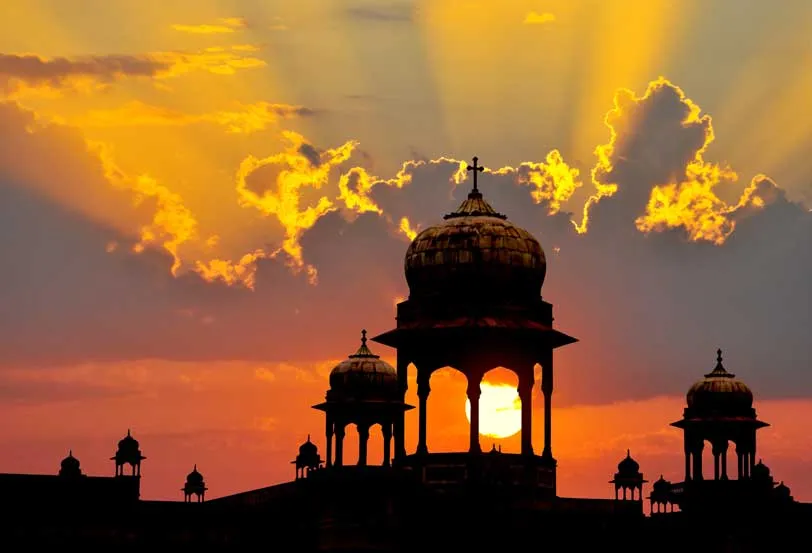
KHIVA WALLED CITY UZBEKISTAN: The ancient walled inner city of Khiva — Itchan Kala — is the most intact medieval city in Central Asia, a UNESCO-listed ensemble of madrasahs, mosques, minarets and caravanserais enclosed within formidable mud-brick walls. Visiting at dusk, when the last light turns the earthen architecture a deep amber and the minarets cast long shadows across the empty lanes, is one of the most evocative experiences Central Asia has to offer.
UZBEKISTAN SILK ROAD CULTURE: The Silk Road left Uzbekistan an extraordinary cultural inheritance — a tradition of craftsmanship in silk weaving, ceramic art, woodcarving and miniature painting that survives to this day in workshops across the country. The Fergana Valley, where mulberry trees still feed silkworms in ancient workshops, and the master craftsmen of Bukhara and Khiva continue traditions stretching back a thousand years and more.
UZBEKISTAN BAZAARS AND CUISINE: Uzbekistan's bazaars are among the most atmospheric in all of Asia — vast, fragrant markets where silk scarves hang beside pyramids of spice, dried fruit and hand-thrown ceramics. The cuisine is equally rewarding: plov — a rich rice dish of lamb, carrots and cumin cooked in a vast kazan — is the national obsession, while lagman noodles, samsa pastries and the exceptional flatbreads of Samarkand complete a food culture of great generosity.
ARAL SEA AND KARAKALPAKSTAN: The story of the Aral Sea — once the world's fourth-largest lake, now reduced to a fraction of its former size by Soviet irrigation projects — is one of the most dramatic environmental stories of the 20th century. The rusting hulks of fishing boats stranded on the former seabed, the ancient desert fortresses of Karakalpakstan and the remote Sudochye wetlands make this a journey of powerful and unforgettable contrasts.